































Everyone has mood swings or seemingly mismatched responses to events sometimes. Fluctuations in our emotional state are normal, but when they’re persistent and start to disrupt how we function on a daily basis, that could be a sign of a mood disorder.
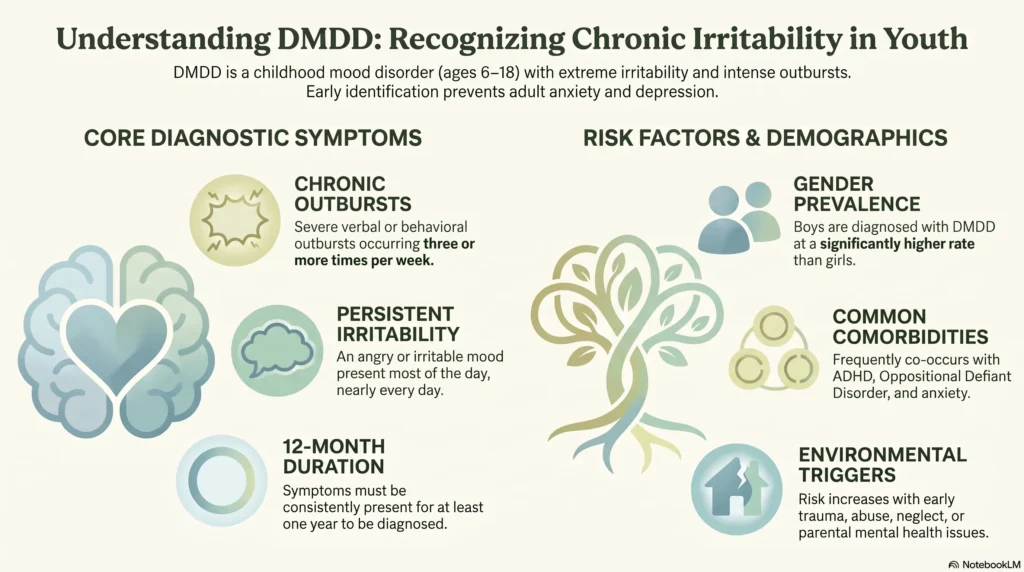
Disruptive Mood Dysregulation Disorder (DMDD) is a mood disorder that specifically impacts young people aged 6-18. It involves being consistently angry and having frequent, intense outbursts. DMDD is not widespread, but some studies have found that it affects up to 3.3% of youth in communities [1].
Not seeking treatment for DMDD increases the risk of developing anxiety, depression, and other mood disorders in adulthood [2]. But treatment is available and is effective. Let’s take a look at what exactly DMDD is, what the best course of care is, and how it can impact mental health in later stages of life.
What Is DMDD?
DMDD is a condition that affects children and adolescents, causing them to have intense irritability and emotional responses that are disproportionate to the situation. Young people with DMDD are more likely to have challenges with relationships and learning.
DMDD is a newly recognized condition, so there aren’t exact figures on how many people suffer from it. However, boys are diagnosed at a much higher rate than girls [3]. To receive a DMDD diagnosis, symptoms need to be present for at least one year and need to manifest in multiple settings, including at home and at school.
What Are the Symptoms of DMDD?
DMDD is characterized by a lack of frustration tolerance and outbursts that are more severe than expected for children of the same age. Symptoms tend to start before the age of 10 and include:
- Emotional outbursts that occur three or more times a week
- Severe displays of anger that continue for over a year
- Irritable mood for most of the day, almost every day
- Difficulty functioning at home, in school, or in social settings
An example display of DMDD is if a parent tells a child they can’t watch television until they clean their room. A typical response is for the child to be annoyed. A child with DMDD, though, may become extremely upset, yell, and hit things. These types of outbursts happen often, but can’t always be anticipated.
The symptoms of DMDD may change as the child grows up: they may have fewer outbursts, but that doesn’t mean that DMDD has improved; they may instead be exhibiting symptoms of anxiety and depression.
What Causes DMDD?
Experts don’t yet know what causes DMDD. The condition has only recently been formalized, and there isn’t sufficient evidence to understand why it occurs. There are suggestions that a complex combination of biological, genetic, and environmental factors causes DMDD, based on causes for adjacent mood disorders such as bipolar disorder [4].
Some factors may increase the likelihood of developing DMDD. These include:
- Having Oppositional Defiant Disorder (ODD), Attention-Deficit/Hyperactivity Disorder (ADHD), or an Anxiety disorder
- Difficulty understanding emotional facial expressions
- Impulsivity
- Psychological, physical, or sexual abuse or neglect
- Having a parent with a mental health disorder
- Early trauma
Can DMDD Be Treated?
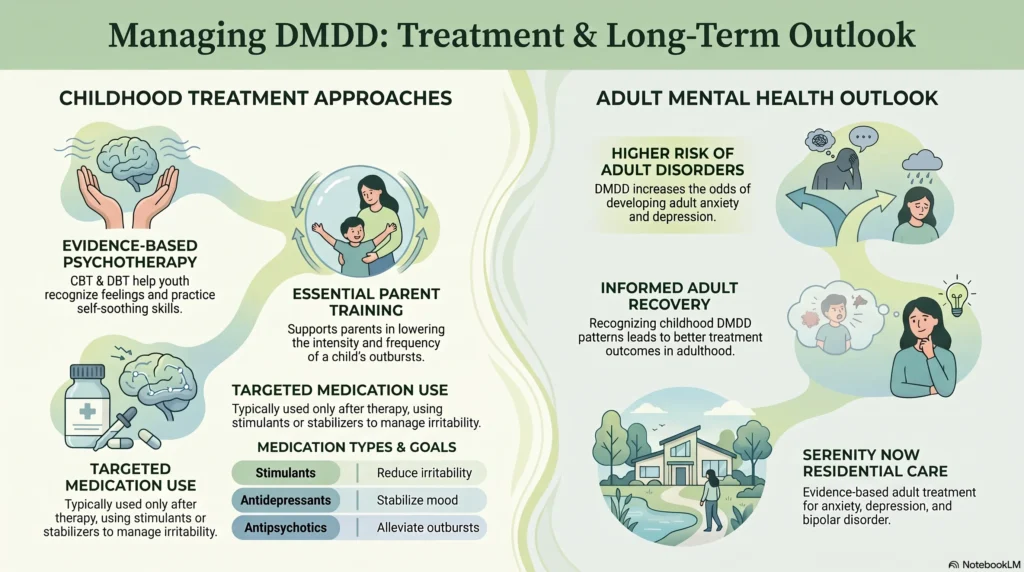
Yes, treatment for DMDD includes a combination of psychotherapy (talk therapy) and medication (if needed). Treatment isn’t specific to DMDD because more research is required, but treatment is effective and modeled on paediatric care for conditions such as anxiety and ADHD.
Therapy approaches include:
Cognitive Behavioral Therapy (CBT) teaches young people how to recognize and manage feelings and thoughts, and to find healthy ways to express them.
Dialectical Behavior Therapy (DBT) helps young people develop emotion regulation, practice self-soothing, and learn skills that improve their relationships with others.
Parent training supports parents to understand and respond to children’s outbursts, helping to lower the intensity and frequency of them.
Medication may be prescribed if necessary, and can include:
- Stimulant medications (e.g., methylphenidate) to reduce irritability
- Antidepressants (e.g., selective serotonin reuptake inhibitors (SSRIs)) to stabilize mood
- Anticonvulsant medications (e.g., valproic acid) to lower aggression
- Atypical antipsychotic medications (e.g., aripiprazole) to alleviate outbursts
You may find that doctors are hesitant to prescribe medication for DMDD. Medication is typically only given after other approaches have been tried and haven’t worked.
Does Treatment For DMDD Work?
Data around treatment for DMDD is small in scope, but there is evidence that CBT and parental training have potential as first-line treatments for the condition. Positive results have also been found with DBT [5]. On top of clinical steps, doctors and care teams can give families emotional support, as well as validate parental concerns and teach behavioral modification to both adults and young people.
Treatment also provides structure that can motivate young people and their families to make positive lifestyle changes. It can instill a sense of hope and clarity that many people feel they lose with a mood disorder diagnosis.
The Connection Between DMDD and Mood Disorders in Adults
Having a DMDD diagnosis means having higher odds of developing anxiety, depression, and other mood disorders as an adult.
Further research is still needed to better understand DMDD, so there are gaps in understanding the exact role that the condition plays in affecting the development of mood disorders at a later stage. However, as more adults receive mood disorder diagnoses, and more studies identify links between early age behaviors and mental health in mature ages, awareness around DMDD will increase [6].
For people who are struggling with a mood disorder in adulthood, recognizing DMDD and how it may have been part of their mental health story can inform treatment in the present and lead to more positive outcomes and self-awareness.
Treatment For Mood Disorders at Serenity Now, Davis, CA
We offer residential treatment for mental health disorders in adults, including anxiety, depression, and bipolar disorder. Our care is professional, empathetic, and integrates evidence-based therapies, medication management, and wellness activities to help you feel whole again as soon as possible. Our licensed clinicians personalize treatment based on your current situation and future goals.
Our center in Davis is a calm environment where you can recover and reconnect with your healthiest self. We have 24/7 supervision to keep you safe and comfortable, and help you develop the tools to be confident and successful in life.
Everyone deserves serenity. Start the path there today. Contact our admissions team.
Sources
[1] Benarous, X. et al. (January 2025). Prevalence and comorbidity rates of disruptive mood dysregulation disorder in epidemiological and clinical samples: systematic review and meta-analysis. European Psychiatry.
[2] National Institute of Mental Health. (2023). Disruptive Mood Dysregulation Disorder: The Basics. nihm.nih.gov.
[3] EBSCO. (2025). Disruptive mood dysregulation disorder (DMDD). ebsco.com.
[4] Yale Medicine. Disruptive Mood Dysregulation Disorder. yalemedicine.org.
[5] Tapia, V. Marie John, R. (September 2018). Disruptive Mood Dysregulation Disorder. The Journal for Nurse Practitioners.
[6] American Psychological Association. (March 2019). Mental Health Issues Increased Significantly in Young Adults Over Last Decade. apa.org.